

 Chinese
 English
What is the difference between damping vibration isolators and spring vibration isolators?
2025-12-04
1. Working principle:
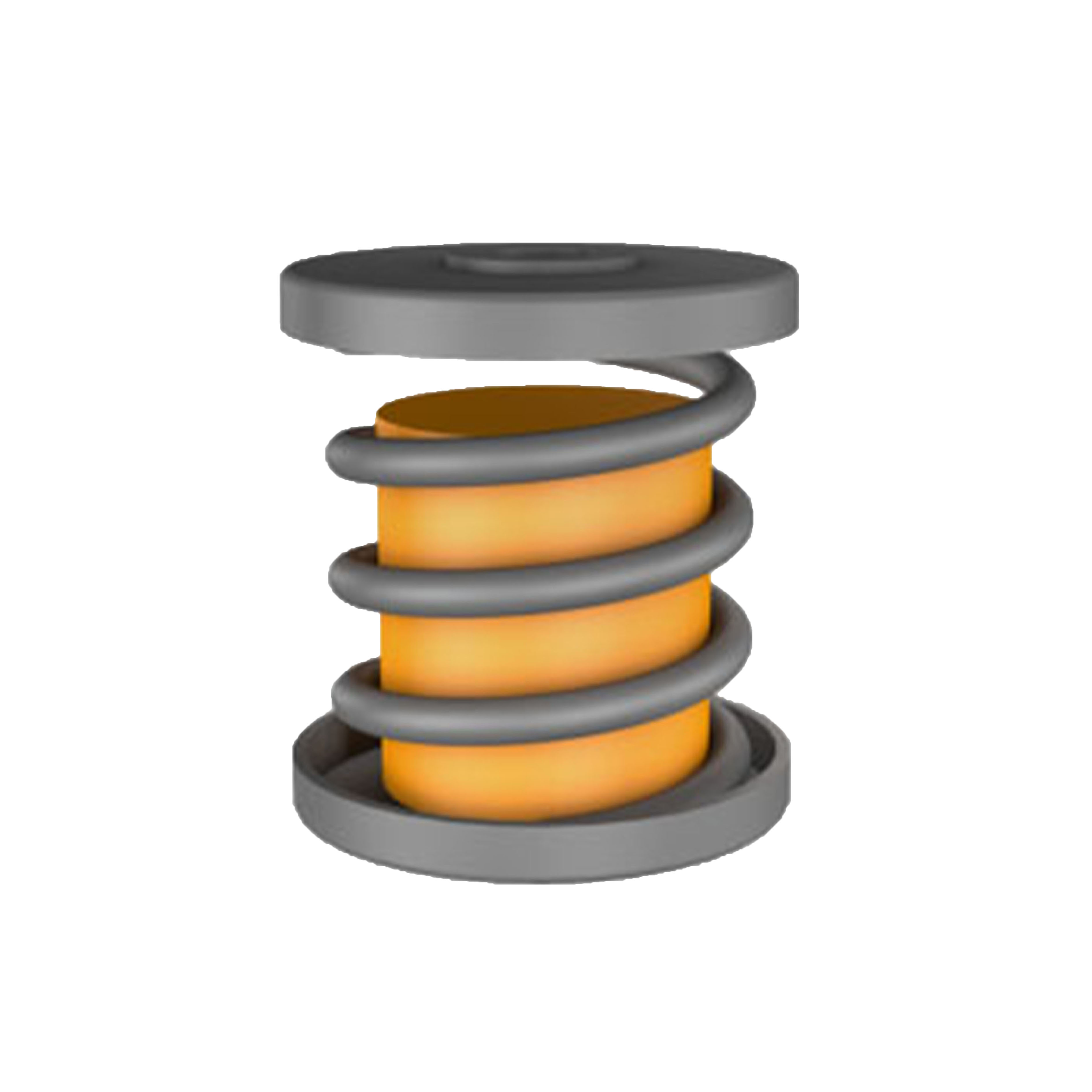
-Damping vibration isolator: It absorbs impact energy by generating damping, thereby damping vibration. It usually combines damping springs and rubber damping pads to achieve more efficient vibration isolation and noise reduction.
-Spring vibration isolator: It absorbs and disperses energy through its elastic properties. It has excellent plasticity, can be shaped into various shapes, and exhibits significant deformability to reduce the natural frequency of vibration isolators.
2. Application areas:
-Damping vibration isolator: widely used for vibration isolation of large structures such as ships, airplanes, and buildings, especially suitable for isolating sound transmission caused by high-frequency impacts. In the automotive field, it is also an important component in the suspension system, which can effectively reduce the vibration and bumps of the vehicle.
-Spring vibration isolator: commonly used in suspension systems of vehicles such as cars, trains, and subways, and also commonly used for vibration isolation of small devices such as consumer electronics. It can effectively reduce the natural frequency of the equipment and provide efficient vibration isolation effect.
3. Performance characteristics:
-Damping vibration isolator: The design usually focuses on stability and weather resistance, such as using cast steel shells and alloy steel springs, which are treated with spray coating to improve service life and shock absorption effect. It has a low natural frequency and good isolation effect.
-Spring vibration isolator: Although it has efficient vibration isolation capability, its natural frequency is difficult to ensure below 5Hz. In addition, compared with damping vibration isolators, its ability to resist environmental pollution and low temperature changes is relatively weak, and its service life may be shorter.
In summary, there are significant differences between damping vibration isolators and spring vibration isolators in terms of working principles, application areas, and performance characteristics. When choosing vibration isolators, a balance should be made based on specific application scenarios and requirements.


 Top
Top