

 Chinese
 English
What is the working principle of a damping vibration isolator
2025-12-04
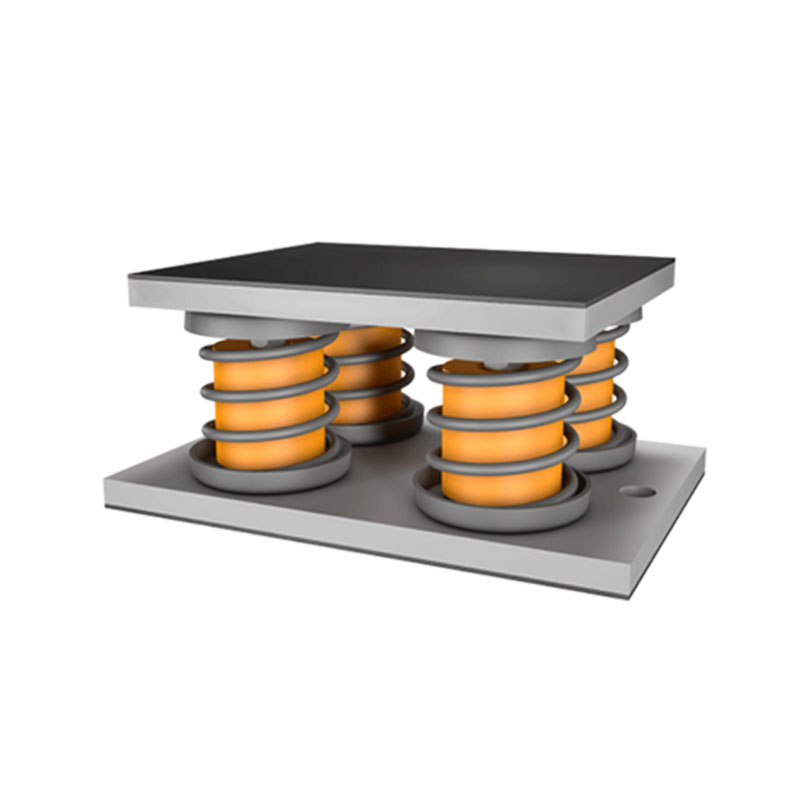
1. Energy dissipation: The core principle of damping vibration isolators is to convert mechanical energy into thermal energy or other forms of energy that can be dissipated by obstructing the relative motion of objects. When an object (such as the body of a car or a component of mechanical equipment) is subjected to vibration or impact, the damping material or structure in the damping vibration isolator begins to take effect.
2. Reduce vibration amplitude: After the mechanical system is subjected to instantaneous impact, damping vibration isolators help the system quickly recover to a stable state, effectively reducing the resonance amplitude of the mechanical structure and avoiding structural damage caused by dynamic stress reaching its limit.
3. Structural protection and reduction of sound radiation: Damping can not only reduce the ability of the structure to transmit vibrations, thereby improving system stability, but also reduce the sound radiation generated by mechanical vibrations, further reducing mechanical noise.
4. Wide applicability: The working principles of damping vibration isolators make them widely used in multiple fields, including but not limited to the automotive industry, aerospace, railway transportation, electronic equipment, construction engineering, and energy and power industries.
In summary, damping vibration isolators convert harmful mechanical energy into other forms of energy and dissipate them through their unique damping effect, thereby achieving the goal of reducing vibration, protecting structures, and improving system stability.


 Top
Top